


All levels
|
33 min 22 sec
|
00:40
|
|
01:21
|
|
04:20
|
|
03:03
|
|
02:25
|
|
03:23
|
|
03:18
|
|
00:39
|
|
01:24
|
|
02:19
|
|
01:57
|
|
02:06
|
|
02:42
|
|
02:11
|
|
01:42
|
Live Your Most Creative Life
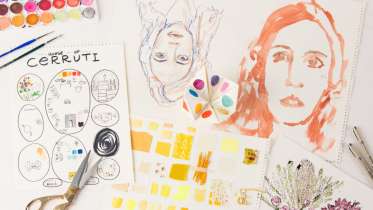
Living a More Creative Life: 30 Ways in 30 Days
Courtney Cerruti
So many of us are on a quest to incorporate creativity into our lives, but short on time and resources, we’re not sure how to begin. For inspiration and sage advice, we turn to artist and explorer, Courtney Cerruti, who incorporates art into everything she does and finds beauty in even the most mundane moments. This series is perfect for aspiring artists, crafters who are in a rut, and anyone who suspects that a creative habit would be good for their soul - your eyes will be opened to new creative possibilities that are easy to practice every day. No matter your skill level, we hope you’ll show up, bring a playful attitude and a willingness to try new things.

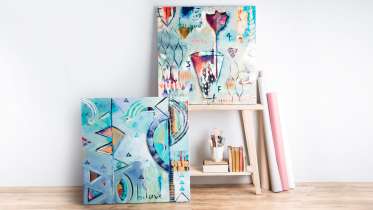
Intuitive Painting: A 3-Part Series
Flora Bowley
Immerse yourself in the world of abstract artist and intuitive painter Flora Bowley. In this epic three-part course, you'll not only learn how to observe the world around you and tap into your creative intuition, but also how to take a brave, curious and open-minded approach to painting with acrylics.
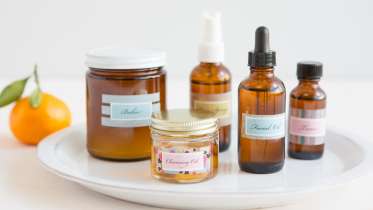
Homemade Apothecary
Amy Karol
Make your own lip balm, facial oil, deodorant, and more, by looking no further than your pantry or local health food store. Amy expertly demystifies the ingredients you need and offers recipes and ratios that result in delicious smelling, high-quality beauty products that will leave your skin and body radiant.
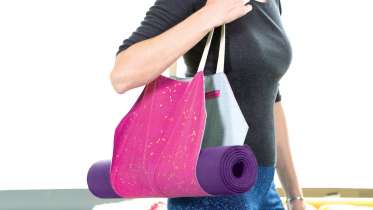
Sew a Yoga Mat Bag
Ashley Nickels
Sewer and quilter Ashley Nickels shows you how to create a stylish, functional carrier bag for your yoga mat. Learn how to cut out the pattern pieces, add handles, and attach D-ring hardware to hold the mat in place. Best of all, this yoga mat bag features a zippered pocket - an essential for stashing your keys and phone while you're on the mat.
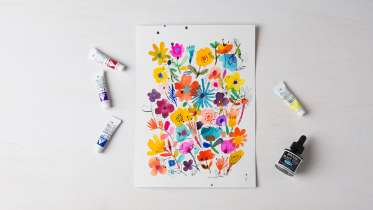
Daily Painting Challenge: Flowers, Fruits and the Natural World
Carolyn Gavin
Join artist and illustrator Carolyn Gavin for a month of exploring color. Using both gouache and watercolor, Carolyn will demonstrate how she works from reference and imagination to create her paintings. She begins the daily challenge with her signature florals, then works through the month using fruits, veggies, and household objects as subjects. You’ll experiment with shape and color and learn how to let inspiration guide you along your painting journey. Finish your paintings by adding detail with pen and ink to create a month of beautifully rich paintings.
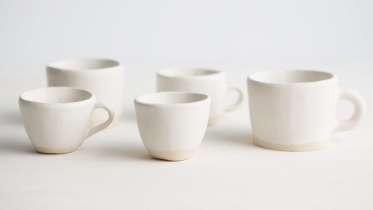
Hand-Built Ceramics: A 3-Part Series
Linda Fahey
Learn how to create beautiful ceramic vessels at home without a potter's wheel. California ceramicist and designer Linda Fahey shows you every step of setting up a studio at home, and then demonstrates three methods for hand-building pottery. Along the way, she covers creating and attaching handles and even provides an introduction to glazing and firing. This three-part course covers all of the essential information you need to know to play with clay in your home studio.
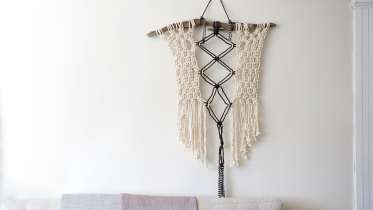
Make a Macramé Wall Hanging
Emily Katz
Modern macramé artist, Emily Katz, teaches how to make her signature bohemian wall hanging. This artwork is built upon a piece of found driftwood, and uses thick cotton rope and one simple knot to create an overall pattern. Throughout the class, Emily shares ideas for adjusting the repeated pattern and the size of the piece to create a custom wall hanging, perfect for you and your space.
Now Playing
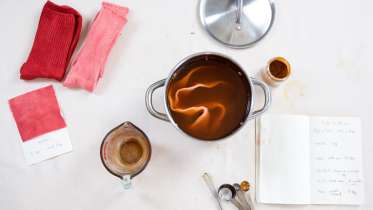
Natural Dyeing: A 2-Part Series
A Verb for Keeping Warm
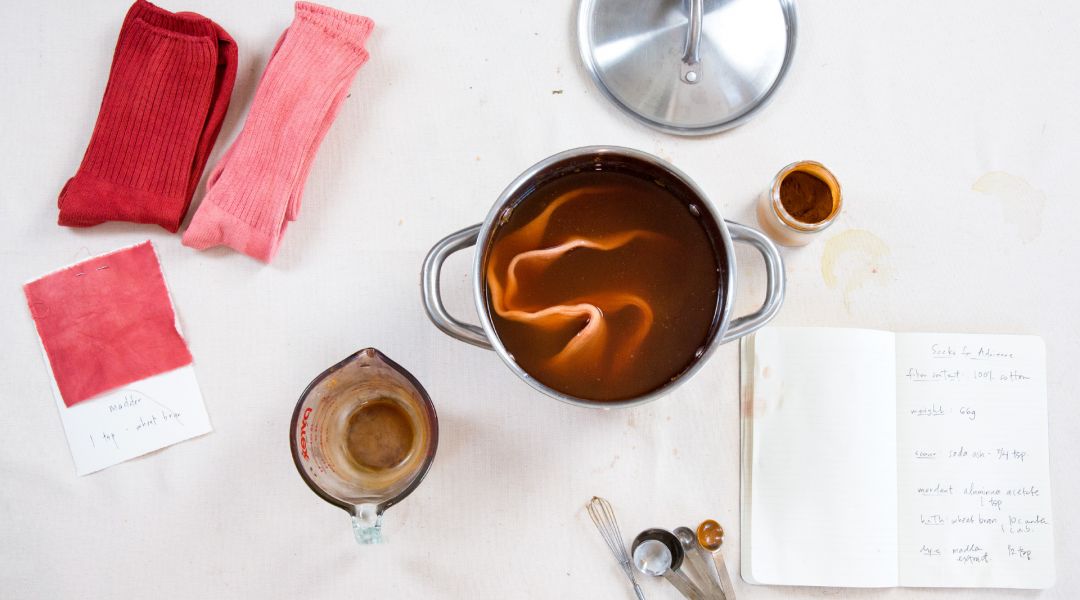
Learn the basics of natural dyeing in this two-part course, enabling you to create fabrics and garments in your very own original hues. Kristine uses all natural dyes in her process, and she discusses how to create a variety of shades by using different dyes, fabrics and dye bath times. In the first part of this class, you will learn how to work with silk, a protein fiber, dyeing it a lovely purple shade with Logwood. In the second part, you will learn how to work with cellulose fibers, dyeing a pair of cotton socks red using Madder extract.
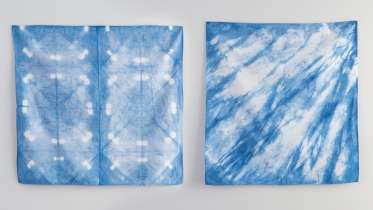
Natural Dyeing with Indigo
A Verb for Keeping Warm
Indigo blue is like no other blue. With natural dyeing expert, Kristine Vejar, learn how to create an indigo vat in your kitchen or backyard. Using a plain cotton bandana, Kristine shows you how to create several resist designs using clothespins and simple folding techniques. You'll learn how to create an Indigo “Mother” and vat in order to create limitless beautiful and unique indigo-dyed textiles.
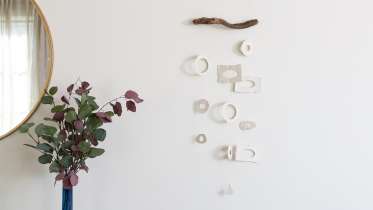
Driftwood Mobile
Diana Fayt
This porcelain driftwood mobile catches the breeze beautifully. Concentric circle and square shapes rolled on cotton results in a soft, organic quality. Diana shows you how to create the charms and the mobile after you fire the clay to its required temperature.
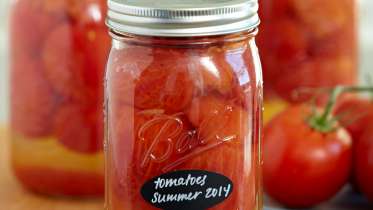
Canning Basics: How to Can Tomatoes
Karen Solomon
Learn how to preserve the taste of late-summer garden tomatoes with canning pro, Karen Solomon. Karen will teach you the basics of selecting and peeling perfectly ripe tomatoes, then show you how to safely can and process them so you can enjoy the taste of summer sunshine all year long. These whole canned tomatoes are perfect for soups, sauces, and everyday cooking throughout the year.
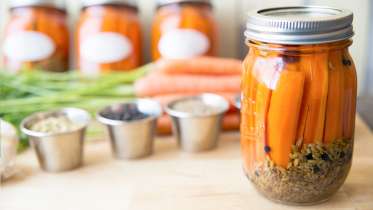
Canning Basics: Make Cumin-Scented Pickled Carrots
Karen Solomon
Learn the ins and outs of canning from preserving pro, Karen. In this class, Karen demystifies the canning process, explaining the necessary (and unnecessary) tools and rules for hot water bath canning as well as important safety tips. For first time canners, Karen recommends starting with a pickled carrot, and she provides a yummy recipe for a basic brine. Note that this brine can be used to pickle any veggie you like – consider this your go-to recipe for all of your pickling needs.
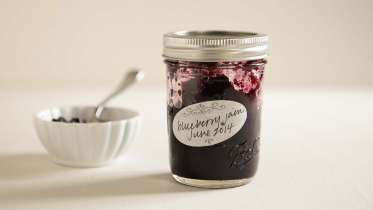
Canning the Best Blueberry Jam
Karen Solomon
In this class, our resident jamming expert, Karen Solomon, shares a simple recipe for a classic favorite: blueberry jam. Karen demonstrates exactly how to make this stove-top recipe, and she also walks you through the basics for properly canning the jars, ensuring a long shelf-life. If you would like to veer away from the classic, Karen provides lots of ideas for add-in flavors, like fruity liqueurs, fresh herbs, citrus zest and extracts.
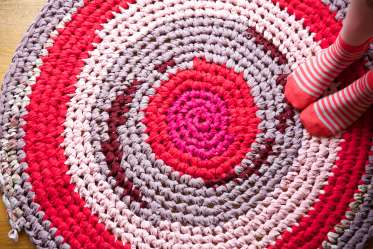
Crochet a Rag Rug
Cal Patch
Learn how to make a traditional crocheted rag rug with Cal Patch. Rag rugs are a great opportunity to use up recycled fabrics like old bed sheets and T-shirts. In this class, Cal shares expert tips on how to shred the fabric intro strips and connect them to make one continuous “yarn” for crocheting. Once you’ve learned the chain stitch and single crochet stitch, you’ll work in spirals to create a round or oval rug.
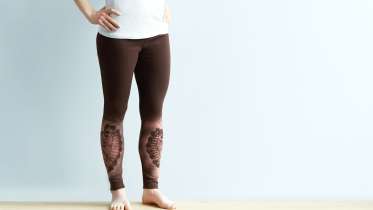
Sewing Leggings
Cal Patch
Stay cozy and chic this winter with your own leggings. Cal offers tips for sewing with stretch fabrics – including different options for seams, and two different kinds of waistbands. Leggings are a warm and versatile staple, and now you can whip up different pairs to match any mood or outfit.
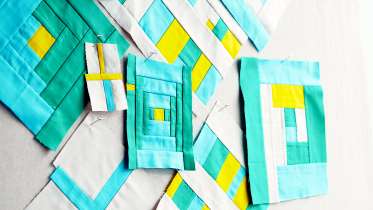
Improvisational Patchwork for Beginners
Heather Jones
Learning how to improvise block construction is a cornerstone of modern quilting. Heather Jones teaches three ways to experiment with improvisational piecing: with a log-cabin block, a stacked-coin block, and with a wonky cross block. This method of creating patchwork is perfect for mixing colorful fabric scraps, allowing you to forget about perfect measurements and straight lines, and learn to play with your creative intuition. At the end, you’ll understand how to combine blocks to produce one-of-a-kind, organic quilts – no “pattern” required.
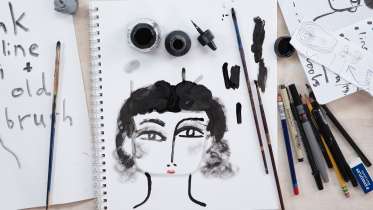
Treasure Hunt Your Artistic Style: A 10-Day Guide
Lilla Rogers
In this fun and energetic 10-day course, Lilla Rogers shows you how to find your authentic artistic style by making a multitude of tiny and huge discernments. From playful exercises to mark-making experiments, Lilla encourages you to approach art with an open mind and tune into what makes your heart beat faster. As an agent, author, and artist with decades in the illustration licensing business, Lilla knows how to sniff out style. At the end of this 10-day journey, you’ll have a better understanding of who you are as an artist and how you want to be seen by the world.
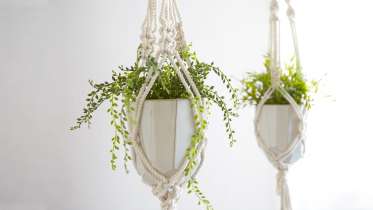
Make a Classic Macramé Plant Hanger
Emily Katz
Learn how to create the most iconic of all macramé projects: the Plant Hanger. Emily Katz shows you how to create a hanger out of cotton rope tied into simple square knots and half square knots. This project is totally customizable and can work with planters of any size. Emily will show you how to calculate the proportions of your planter and construct a hanger that will hold the pot perfectly.
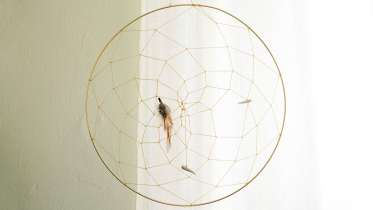
DIY Dream Catcher
Emily Katz
Macramé artist Emily Katz demonstrates how to weave a modern version of the classic dream catcher. Learn how to create an overall web design, and then personalize your project by incorporating found objects and treasured keepsakes. Once you’re done, hang your dream catcher over your bed to ward off bad dreams, or display it in your home as a piece of art.
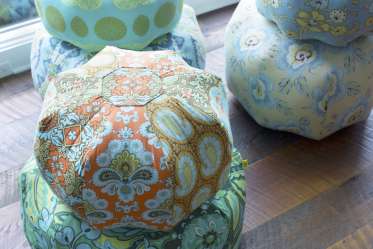
Gumdrop Pillow
Amy Butler
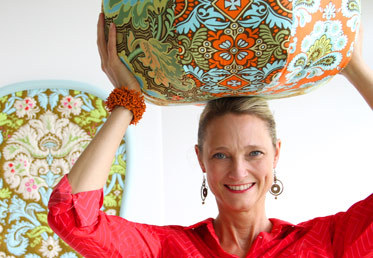
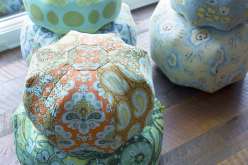
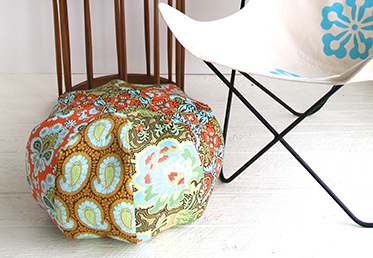
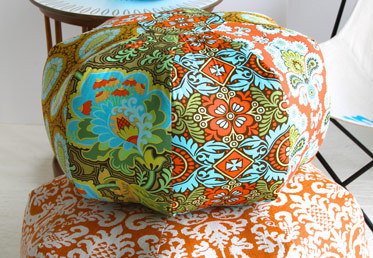
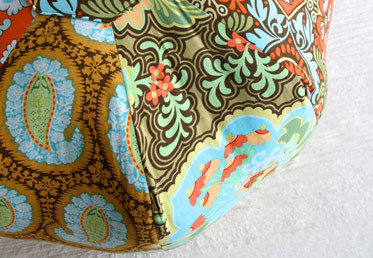
Learn to make stacks of these pillows in all different combinations of fabric. Their oversized scale lends a cozy drama to any part of your home. Amy shows you how to build the pillow in sections, insert an invisible zipper and finish the pillow. Bring one of Amy’s signature styles into your sewing repertoire and your home.

Taught by Amy Butler
Part of Mini Journeys
Start Free Trial or
Buy For $19.95
Learn to make stacks of these pillows in all different combinations of fabric. Their oversized scale lends a cozy drama to any part of your home. Amy shows you how to build the pillow in sections, insert an invisible zipper and finish the pillow. Bring one of Amy’s signature styles into your sewing repertoire and your home.
Learn how to:
What you’ll get:
Here’s what you’ll need:
Materials for 18" pillow:
- 2 1/4 yards of 44" quilting fabric
- downloadable PDF pattern
- 7 12oz bags of poly-fil (Amy uses Fairfield Nature-Fil)
- 8x8 inch piece of sew in lightweight interfacing
- measuring tape
- pen or pencil
- 12-14" invisible zipper
- invisible zipper foot
- point turner
- scissors
- straight pins and pin cushion
- iron and ironing board
- sewing machine
- sewing machine thread
Downloads:
- Make pillows with different combinations of fabrics
- Build this pillow in sections
- Insert an invisible zipper
- Finish the pillow
What you’ll get:
- An easy-to-follow lesson on how to make a gumdrop pillow
- 8 HD video lessons you can access online anytime, anywhere
- Itemized supply list
- Step-by-step expert instruction from Amy Butler
- The ability to leave comments, ask questions and interact with other students

Member Gallery
Browse members' projects from this class and share your own work! Learn how to take great photos here.
Load More
Transcript
Class PDF
Gumdrop Pillow Reviews
754 users recommended this class to a friend

Evelyn Dunagan
Clear instructions about process. Different information than I have heard in other classes, particularly about scouring silk.
November 14
Stitch Goldberg
I'm a natural dyer, so this info wasn't new, but I enjoy seeing the differences in people's processes. I thought it was interesting and curious that Kristine says here that the amount of water in a dye bath is significant. Most natural dyers I've heard say it doesn't matter how much water, just the ratio of dye to fiber, and enough to freely rotate the fiber. There's so much variation with natural dyeing, I love it. I haven't worked with extracts much, mostly whole plant.
More than 3 months ago

Maria Conti
Thank you for the clear instructions. I'm so looking forward to trying this out.
More than 3 months ago
Related Classes