


All levels
|
3 hours 52 min
|
00:33
|
|
08:28
|
|
11:49
|
|
06:10
|
|
08:03
|
|
09:18
|
|
06:48
|
|
14:48
|
|
08:02
|
|
10:39
|
|
08:51
|
|
05:23
|
|
07:14
|
|
09:35
|
|
15:21
|
|
06:56
|
|
12:34
|
|
10:40
|
|
04:02
|
|
05:56
|
|
10:57
|
|
08:19
|
|
09:42
|
|
09:34
|
|
11:48
|
|
05:27
|
|
05:26
|

Taught by Sew Daily
Start Free Trial or
Buy For $49.95
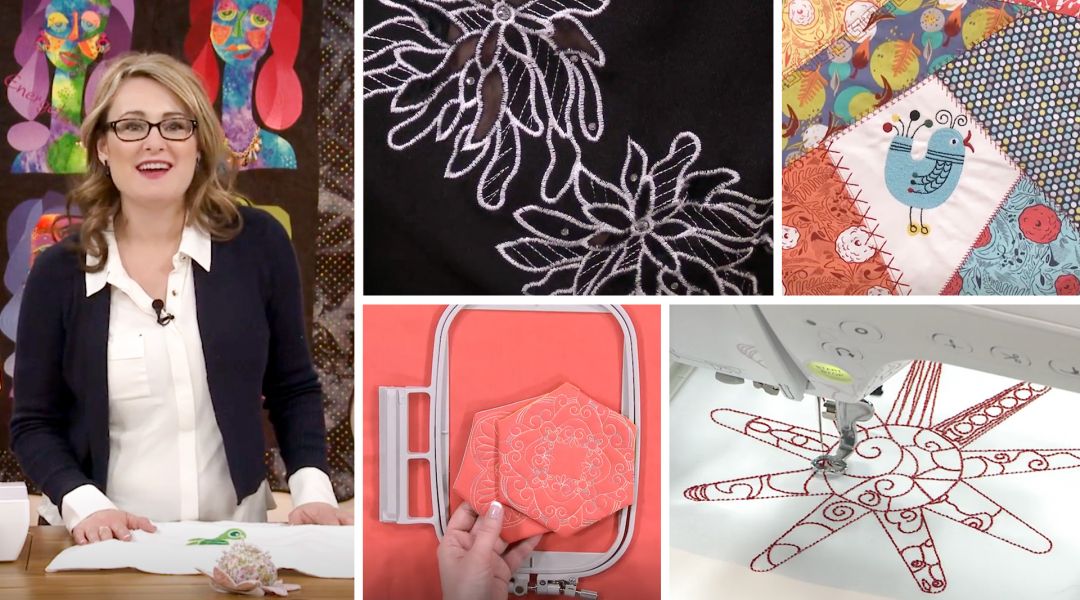
Interested in machine embroidery but not sure where to begin—or ready to take your skills beyond the basics? Absolute Beginner Machine Embroidery with nationally recognized sewing and quilting educator Sara Gallegos will help you get the most out of your embroidery machine and turn your ideas into beautiful stitched projects. Throughout the series, you’ll explore choosing a machine, embroidery design types, stabilizers and threads, stitching on ready-made items, working with tricky fabrics, the basics of embroidery software, and more. Whether you sew garments, quilts, or crafts, this series will build your confidence and show you just how fun machine embroidery can be.
Episode 1 — Choosing an Embroidery Machine
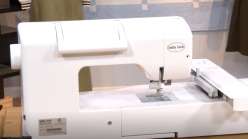
Not sure what kind of machine embroidery you want to do? In this episode, Sara breaks down the different types of embroidery machines and what each one is best suited for. Learn about the differences between standalone, single-needle, and multi-needle machines, along with hoop sizes, special features, home vs. industrial options, and price points.
Episode 2 — Choosing Embroidery Threads
Not every type of thread is suited for every type of project, but many more types of threads can be used in machine embroidery than just the standard rayon or polyester embroidery thread. Sara guides you through what makes a successful project with several thread types, including what needle to use, why you might choose one thread type over another, and even what machine speed to use for certain more difficult threads.
Episode 3 — Basic Embroidery Designs
Redwork embroidery designs are some of the most basic embroidery designs available. Some redwork designs are complex, and not all of them are red. Sara discusses the definition of a redwork design and stitches one out on the Baby Lock. She then shows more examples and other styles of basic embroidery designs like monograms, frames, simple appliques, and basic fill stitches.
Episode 4 — Tear-Away Stabilizers
There are many different types of stabilizers available for embroidery. Sara talks about the different styles of tear away stabilizer, which does exactly what its name says -- it easily tears away when you've completed the embroidery. There are light weight, medium weight, and heavy weight tear away stabilizers, and they come in white and black as well as regular, iron-on, and sticky. Learn when to use one piece of tear away or two and why you would use each weight.
Episode 5 — Embroidery Blanks
Embroidery blanks are often store-bought projects which you can add an embroidery to. Bags, tee shirts, aprons, ball caps, tea towels and more come without designs already on them. See a variety of different designs Sara has stitched on blanks as she demonstrates adding a name to a tea towel.
Episode 6 — Cut-Away Stabilizers
What stabilizer should you use for your project? Sara discusses the different styles of cut away stabilizers in this episode. There are light, medium, and heavy weights as well as fusibles and sheers. See several projects Sara has used cut away stabilizer on like a jacket and pillow covers. She also shows how you can tell when one layer of cut away isn't enough.
Episode 7 — Appliqué Designs in the Embroidery Machine
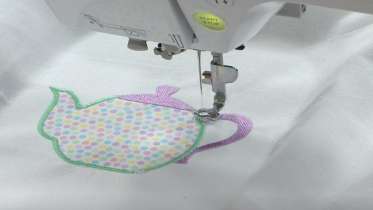
Appliqué in the hoop is the fastest and easiest way to get beautiful, perfect appliqué stitching. Sara shows finished examples including a quilt with appliqué, a pillow cover with has both in-the-hoop appliqué and freehand machine appliqué, a placemat, and tea towels. She then demonstrates how to add a teapot appliqué to a tea towel using embroidery stabilizer and an in-the-hoop appliqué embroidery design.
Episode 8 — Metallic Thread Designs in the Embroidery Machine
Metallic threads can be a little intimidating to work with because they're more prone to breakage or shredding than other thread types. There are many tips and tricks that can prevent metallic threads from breaking or shredding however, and Sara shares many of them while explaining why metallic threads are more prone to problems.
Episode 9 — Water-Soluble Stabilizers
Some stabilizers are designed to be left in the project after it's embroidered, but others are designed to be removed after they've been stitched on. Water-soluble stabilizers are designed to disappear completely which makes creating woven projects, laces, and other free-standing projects in the hoop possible. Sara demonstrates making a dimensional butterfly on a sheer organza fabric and how to cut out the design while it's still in the hoop for added stability.
Episode 10 — Quilting in the Hoop on the Embroidery Machine
Quilting in the hoop on the embroidery machine can be used to quilt smaller quilting projects like coasters and placemats, quilt-as-you-go-blocks, and even full quilts with multiple hoopings. Sara demonstrates how to create a quilted coaster, using quilt batting in the place of stabilizer. She discusses things to think about when re-sizing an embroidery design, and shows how to use a pattern piece to cut embroidered fabric into a desired shape, in this case a hexagon. Once the embroidered piece is cut out, Sara discusses how to finish the back of the coaster.
Episode 11 — Free-Standing Lace Designs
Free-standing lace designs can be used in many ways, including for adding dimension and texture to other projects, making ornaments, and for any project which you might use traditional or pre-made lace. Sara shows what type of water-soluble stabilizer to use to create a free-standing lace snowflake and demonstrates how to cut around the stitching to reduce the amount of stabilizer which needs to rinse away. She also shows how to rinse out the stabilizer and talks about things you might consider to help the embroidered design dry flat.
Episode 12 — Hoopless Machine Embroidery
Some projects are either too small or too thick to go in an embroidery hoop. There are also fabrics like velvets or furs which you might want to add an embroidery to but wouldn't want the hoop to flatten any of the fabric's natural dimension. In this episode, Sara shows how to stitch on blank drink koozies with a tear-away sticky stabilizer, using methods that can translate to any other projects or fabrics which you might want to embroider without placing them between an inner and outer embroidery hoop. Sara also shows how easy it is to remove the stitched design from the stabilizer once it's embroidered.
Episode 13 — Proper Placement in the Embroidery Hoop
When you'd like to add embroidery to a shirt, a bag, a pillowcase, or any number of other projects, positioning the project in the embroidery hoop for optimal design positioning can seem challenging. Sara shares some tips and tricks for centering a piece of fabric in the hoop and for positioning a design on a pre-made shirt or sweater. She also shows a hoodie she embroidered on and talks about how she chose the positioning of the designs.
Episode 14 — In-the-Hoop Embroidery Designs
Small projects made entirely in the embroidery hoop are fun, fast, and make great gifts. They can be a little confusing if you haven't worked on one before and aren't familiar with the stitching order, though. Sara demonstrates how to make a USB thumb drive pouch in the hoop from start to finish and shows what's different about the little pig softie project and talks about how to finish it.
Episode 15 — Embroidery Software
There are many different places where you can purchase embroidery designs and many different formats you can buy them in. Some collections may even have multiple formats. Without embroidery software, it's difficult to figure out on your computer what each of the embroidery files will look like once embroidered. One of the most basic things that embroidery software does is allow you to view all of the designs you have on your computer. You can also view each designs' colors, change colors, and much more with embroidery software. Sara talks about some of the things embroidery software can do and what you might consider before purchasing.
Episode 16 — Proper Hooping Techniques for Machine Embroidery
Stretchy and slippery fabrics like knits or organzas are a couple of the fabric types which can be difficult to hoop for embroidery. Sara gives tips and techniques for working with difficult fabrics and discusses things to keep in mind when hooping any type of fabric. She demonstrates how to hoop organza, flannel, and quilting cotton and talks about the use of stabilizer and possibly starch with each kind of fabric.
Episode 17 — Pucker-Free Machine Embroidery
Something that can happen when you add an embroidery to a fabric or garment is puckering of the fabric either within or around the design. Sara talks about using sheer fabrics, stretchy fabrics and thick fabrics which might tend to get pulled into heavy stitching and discusses what stabilizers and threads to use for each. She also demonstrates embroidering a monogram on a baby blanket made of stretchy, thicker fabric.
Episode 18 — Heat-Removable Stabilizers
There are two different types of heat-removable stabilizer, and Sara talks about both. She isn't as fond of the fabric style heat-removable stabilizer and discusses why, but she does quite like the cling-wrap style heat removable stabilizer and demonstrates how easy it is to remove when used as a topper for the little pig softie project which was discussed in episode 14 In-the-Hoop Embroidery Designs.
Episode 19 — Organizing an Embroidery Design Library
If you have multiple embroidery designs, whether from your machine, downloaded from the internet, purchased on disc, or a variety of sources, it may be difficult to find the design you're looking for. Sara talks about several ways a design library can be organized on the computer and demonstrates a couple of her favorites.
Episode 20 — Digitizing Machine Embroidery 101
Each of the embroideries you own can be easily altered in a number of ways. With basic embroidery digitizing software, you can change the colors of the embroidery and see what they'll look like without having to stitch it out. You can remove a section of the embroidery before stitching in the same manner that Sara didn't stitch the X's on the teapot episode 7 Applique Designs in the Embroidery Machine. You can also combine two embroidery designs into a single design file, and you can save any work you've done in the software so that it'll stitch the way you want it to in the machine.
Episode 21 — Bobbin Work with an Embroidery Machine
One of Sara's very favorite techniques is bobbin work, because it allows her to use yarns and threads that she normally can't use for embroidery. It works by using normal thread in the top of he machine which goes through the needle and a thicker yarn or thread that won't fit through the needle wound in the bobbin. There are some special considerations to take in mind when doing bobbin work, however, and Sara discusses what those considerations and machine adjustments are. She then demonstrates how to do a bobbin work embroidery and what it looks like when you flip it over to the right side.
Episode 22 — Machine Embroidering on Knits
Knits can be intimidating because they stretch and sometimes pucker. When you pick the right kinds of designs and use an appropriate thread and stabilizer, embroideries can easily be a wonderful addition to knit items. Sara shows several examples of embroideries she's done on knits and talks about adding another stabilizer to the back of an embroidery to give a soft cover over the sometimes-scratchy stitching on a garment. Because she doesn't want any hoop marks left on her cardigan once she stitches on it, Sara uses a spray adhesive on her stabilizer to put the cardigan on top of the hop instead of inside it. She then stitches out an adorable design near the hem of the cardigan.
Episode 23 — Lofty Machine Embroidery
Thick fabrics and fabrics that have a pile to them (like fur, towels, and velvets) are difficult, if not impossible to hoop -- that's why Sara recommends sticky stabilizer in the hoop. She also recommends using a topper stabilizer to keep the embroidery from getting buried in the fabric. Sara shows several examples of thick or lofty fabrics with embroideries, then demonstrates embroidering a cute sea turtle on a hand towel.
Episode 24 — Combining Machine Embroidery Designs
Sometimes you want to put more than one embroidery design on a project. If the designs are going to be spaced far apart on the project, it may need more than one hooping to get all of the designs completed. If the designs are close together, they can all be stitched out in one hooping, and by programming embroidery machine to stitch out all of those embroideries one after another or all in combination. Sara demonstrates how to gather multiple designs together on the screen of the embroidery machine to make a cute springtime wall hanging all in one hooping.
Episode 25 — Yarn Couching with an Embroidery Machine
Machine embroideries can be made with more than just thread. In a previous episode, Sara showed bobbin work where a thick thread or yarn can be wound in the bobbin and the embroidery done that way. If the design is too large for one bobbin-worth of thread or yarn, or the yarn or ribbon is too thick to be wound in a bobbin, yarn couching or ribbon couching is another method of using these thicker embellishments with embroidery. Sara demonstrates stitching out a leaf design with a ribbon yarn threaded through the special yarn couching foot and regular matching thread in the top and bobbin.
Episode 26 — Buying, Selling, and Machine Embroidery
Some embroidery designers are completely okay with you stitching their design onto a project and selling the project. Other designers have special license to their designs and are only okay with you stitching their designs on gifts or projects for yourself but not on items you're going to sell. Sara discusses how to find out if a design is licensed to be able to be used on items for sale and what copyright laws might apply to your projects.
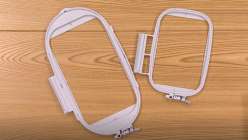
Episode 1 — Choosing an Embroidery Machine
Not sure what kind of machine embroidery you want to do? In this episode, Sara breaks down the different types of embroidery machines and what each one is best suited for. Learn about the differences between standalone, single-needle, and multi-needle machines, along with hoop sizes, special features, home vs. industrial options, and price points.
Episode 2 — Choosing Embroidery Threads
Not every type of thread is suited for every type of project, but many more types of threads can be used in machine embroidery than just the standard rayon or polyester embroidery thread. Sara guides you through what makes a successful project with several thread types, including what needle to use, why you might choose one thread type over another, and even what machine speed to use for certain more difficult threads.
Episode 3 — Basic Embroidery Designs
Redwork embroidery designs are some of the most basic embroidery designs available. Some redwork designs are complex, and not all of them are red. Sara discusses the definition of a redwork design and stitches one out on the Baby Lock. She then shows more examples and other styles of basic embroidery designs like monograms, frames, simple appliques, and basic fill stitches.
Episode 4 — Tear-Away Stabilizers
There are many different types of stabilizers available for embroidery. Sara talks about the different styles of tear away stabilizer, which does exactly what its name says -- it easily tears away when you've completed the embroidery. There are light weight, medium weight, and heavy weight tear away stabilizers, and they come in white and black as well as regular, iron-on, and sticky. Learn when to use one piece of tear away or two and why you would use each weight.
Episode 5 — Embroidery Blanks
Embroidery blanks are often store-bought projects which you can add an embroidery to. Bags, tee shirts, aprons, ball caps, tea towels and more come without designs already on them. See a variety of different designs Sara has stitched on blanks as she demonstrates adding a name to a tea towel.
Episode 6 — Cut-Away Stabilizers
What stabilizer should you use for your project? Sara discusses the different styles of cut away stabilizers in this episode. There are light, medium, and heavy weights as well as fusibles and sheers. See several projects Sara has used cut away stabilizer on like a jacket and pillow covers. She also shows how you can tell when one layer of cut away isn't enough.
Episode 7 — Appliqué Designs in the Embroidery Machine
Appliqué in the hoop is the fastest and easiest way to get beautiful, perfect appliqué stitching. Sara shows finished examples including a quilt with appliqué, a pillow cover with has both in-the-hoop appliqué and freehand machine appliqué, a placemat, and tea towels. She then demonstrates how to add a teapot appliqué to a tea towel using embroidery stabilizer and an in-the-hoop appliqué embroidery design.
Episode 8 — Metallic Thread Designs in the Embroidery Machine
Metallic threads can be a little intimidating to work with because they're more prone to breakage or shredding than other thread types. There are many tips and tricks that can prevent metallic threads from breaking or shredding however, and Sara shares many of them while explaining why metallic threads are more prone to problems.
Episode 9 — Water-Soluble Stabilizers
Some stabilizers are designed to be left in the project after it's embroidered, but others are designed to be removed after they've been stitched on. Water-soluble stabilizers are designed to disappear completely which makes creating woven projects, laces, and other free-standing projects in the hoop possible. Sara demonstrates making a dimensional butterfly on a sheer organza fabric and how to cut out the design while it's still in the hoop for added stability.
Episode 10 — Quilting in the Hoop on the Embroidery Machine
Quilting in the hoop on the embroidery machine can be used to quilt smaller quilting projects like coasters and placemats, quilt-as-you-go-blocks, and even full quilts with multiple hoopings. Sara demonstrates how to create a quilted coaster, using quilt batting in the place of stabilizer. She discusses things to think about when re-sizing an embroidery design, and shows how to use a pattern piece to cut embroidered fabric into a desired shape, in this case a hexagon. Once the embroidered piece is cut out, Sara discusses how to finish the back of the coaster.
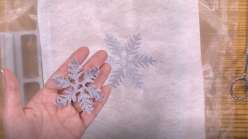
Episode 11 — Free-Standing Lace Designs
Free-standing lace designs can be used in many ways, including for adding dimension and texture to other projects, making ornaments, and for any project which you might use traditional or pre-made lace. Sara shows what type of water-soluble stabilizer to use to create a free-standing lace snowflake and demonstrates how to cut around the stitching to reduce the amount of stabilizer which needs to rinse away. She also shows how to rinse out the stabilizer and talks about things you might consider to help the embroidered design dry flat.
Episode 12 — Hoopless Machine Embroidery
Some projects are either too small or too thick to go in an embroidery hoop. There are also fabrics like velvets or furs which you might want to add an embroidery to but wouldn't want the hoop to flatten any of the fabric's natural dimension. In this episode, Sara shows how to stitch on blank drink koozies with a tear-away sticky stabilizer, using methods that can translate to any other projects or fabrics which you might want to embroider without placing them between an inner and outer embroidery hoop. Sara also shows how easy it is to remove the stitched design from the stabilizer once it's embroidered.
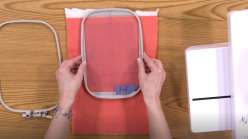
Episode 13 — Proper Placement in the Embroidery Hoop
When you'd like to add embroidery to a shirt, a bag, a pillowcase, or any number of other projects, positioning the project in the embroidery hoop for optimal design positioning can seem challenging. Sara shares some tips and tricks for centering a piece of fabric in the hoop and for positioning a design on a pre-made shirt or sweater. She also shows a hoodie she embroidered on and talks about how she chose the positioning of the designs.
Episode 14 — In-the-Hoop Embroidery Designs
Small projects made entirely in the embroidery hoop are fun, fast, and make great gifts. They can be a little confusing if you haven't worked on one before and aren't familiar with the stitching order, though. Sara demonstrates how to make a USB thumb drive pouch in the hoop from start to finish and shows what's different about the little pig softie project and talks about how to finish it.
Episode 15 — Embroidery Software
There are many different places where you can purchase embroidery designs and many different formats you can buy them in. Some collections may even have multiple formats. Without embroidery software, it's difficult to figure out on your computer what each of the embroidery files will look like once embroidered. One of the most basic things that embroidery software does is allow you to view all of the designs you have on your computer. You can also view each designs' colors, change colors, and much more with embroidery software. Sara talks about some of the things embroidery software can do and what you might consider before purchasing.
Episode 16 — Proper Hooping Techniques for Machine Embroidery
Stretchy and slippery fabrics like knits or organzas are a couple of the fabric types which can be difficult to hoop for embroidery. Sara gives tips and techniques for working with difficult fabrics and discusses things to keep in mind when hooping any type of fabric. She demonstrates how to hoop organza, flannel, and quilting cotton and talks about the use of stabilizer and possibly starch with each kind of fabric.
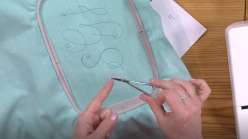
Episode 17 — Pucker-Free Machine Embroidery
Something that can happen when you add an embroidery to a fabric or garment is puckering of the fabric either within or around the design. Sara talks about using sheer fabrics, stretchy fabrics and thick fabrics which might tend to get pulled into heavy stitching and discusses what stabilizers and threads to use for each. She also demonstrates embroidering a monogram on a baby blanket made of stretchy, thicker fabric.
Episode 18 — Heat-Removable Stabilizers
There are two different types of heat-removable stabilizer, and Sara talks about both. She isn't as fond of the fabric style heat-removable stabilizer and discusses why, but she does quite like the cling-wrap style heat removable stabilizer and demonstrates how easy it is to remove when used as a topper for the little pig softie project which was discussed in episode 14 In-the-Hoop Embroidery Designs.
Episode 19 — Organizing an Embroidery Design Library
If you have multiple embroidery designs, whether from your machine, downloaded from the internet, purchased on disc, or a variety of sources, it may be difficult to find the design you're looking for. Sara talks about several ways a design library can be organized on the computer and demonstrates a couple of her favorites.
Episode 20 — Digitizing Machine Embroidery 101
Each of the embroideries you own can be easily altered in a number of ways. With basic embroidery digitizing software, you can change the colors of the embroidery and see what they'll look like without having to stitch it out. You can remove a section of the embroidery before stitching in the same manner that Sara didn't stitch the X's on the teapot episode 7 Applique Designs in the Embroidery Machine. You can also combine two embroidery designs into a single design file, and you can save any work you've done in the software so that it'll stitch the way you want it to in the machine.
Episode 21 — Bobbin Work with an Embroidery Machine
One of Sara's very favorite techniques is bobbin work, because it allows her to use yarns and threads that she normally can't use for embroidery. It works by using normal thread in the top of he machine which goes through the needle and a thicker yarn or thread that won't fit through the needle wound in the bobbin. There are some special considerations to take in mind when doing bobbin work, however, and Sara discusses what those considerations and machine adjustments are. She then demonstrates how to do a bobbin work embroidery and what it looks like when you flip it over to the right side.
Episode 22 — Machine Embroidering on Knits
Knits can be intimidating because they stretch and sometimes pucker. When you pick the right kinds of designs and use an appropriate thread and stabilizer, embroideries can easily be a wonderful addition to knit items. Sara shows several examples of embroideries she's done on knits and talks about adding another stabilizer to the back of an embroidery to give a soft cover over the sometimes-scratchy stitching on a garment. Because she doesn't want any hoop marks left on her cardigan once she stitches on it, Sara uses a spray adhesive on her stabilizer to put the cardigan on top of the hop instead of inside it. She then stitches out an adorable design near the hem of the cardigan.
Episode 23 — Lofty Machine Embroidery
Thick fabrics and fabrics that have a pile to them (like fur, towels, and velvets) are difficult, if not impossible to hoop -- that's why Sara recommends sticky stabilizer in the hoop. She also recommends using a topper stabilizer to keep the embroidery from getting buried in the fabric. Sara shows several examples of thick or lofty fabrics with embroideries, then demonstrates embroidering a cute sea turtle on a hand towel.
Episode 24 — Combining Machine Embroidery Designs
Sometimes you want to put more than one embroidery design on a project. If the designs are going to be spaced far apart on the project, it may need more than one hooping to get all of the designs completed. If the designs are close together, they can all be stitched out in one hooping, and by programming embroidery machine to stitch out all of those embroideries one after another or all in combination. Sara demonstrates how to gather multiple designs together on the screen of the embroidery machine to make a cute springtime wall hanging all in one hooping.
Episode 25 — Yarn Couching with an Embroidery Machine
Machine embroideries can be made with more than just thread. In a previous episode, Sara showed bobbin work where a thick thread or yarn can be wound in the bobbin and the embroidery done that way. If the design is too large for one bobbin-worth of thread or yarn, or the yarn or ribbon is too thick to be wound in a bobbin, yarn couching or ribbon couching is another method of using these thicker embellishments with embroidery. Sara demonstrates stitching out a leaf design with a ribbon yarn threaded through the special yarn couching foot and regular matching thread in the top and bobbin.
Episode 26 — Buying, Selling, and Machine Embroidery
Some embroidery designers are completely okay with you stitching their design onto a project and selling the project. Other designers have special license to their designs and are only okay with you stitching their designs on gifts or projects for yourself but not on items you're going to sell. Sara discusses how to find out if a design is licensed to be able to be used on items for sale and what copyright laws might apply to your projects.
Member Gallery
Browse members' projects from this class and share your own work! Learn how to take great photos here.
Load More
Transcript
Absolute Beginner Machine Embroidery Season 1 Reviews
5 users recommended this class to a friend

Francine Levesque
Though i do not own an embroidery machine, i appreciated the stabilizer and free motion embroidery information. However it would be nice to be presented with options over the brand specific marketing of Sulky stabilizers, Madeira threads and Babylock machines.
More than 3 months ago
2

Creativebug Staff
We really appreciate you taking the time to share your feedback, Francine. When this series was produced for QNNtv about a decade ago, it was heavily sponsored by Baby Lock, Madeira, and Sulky, and I agree that the branding can feel overly prominent. That said, I’ve watched all the seasons of ABME and think there are still plenty of great lessons, techniques, and project ideas to be found throughout the series—especially if you can look past the branding that helped make the show possible.
September 15, 2026
Related Classes